What are good social scripts for autistic kids?
Good social scripts are short, sound like a real kid, and give the child a choice of words. Offer two versions of most lines: a plain, polite one and a playful one. Your child picks the one that sounds like them, practises it at home, then changes the words until they fit.
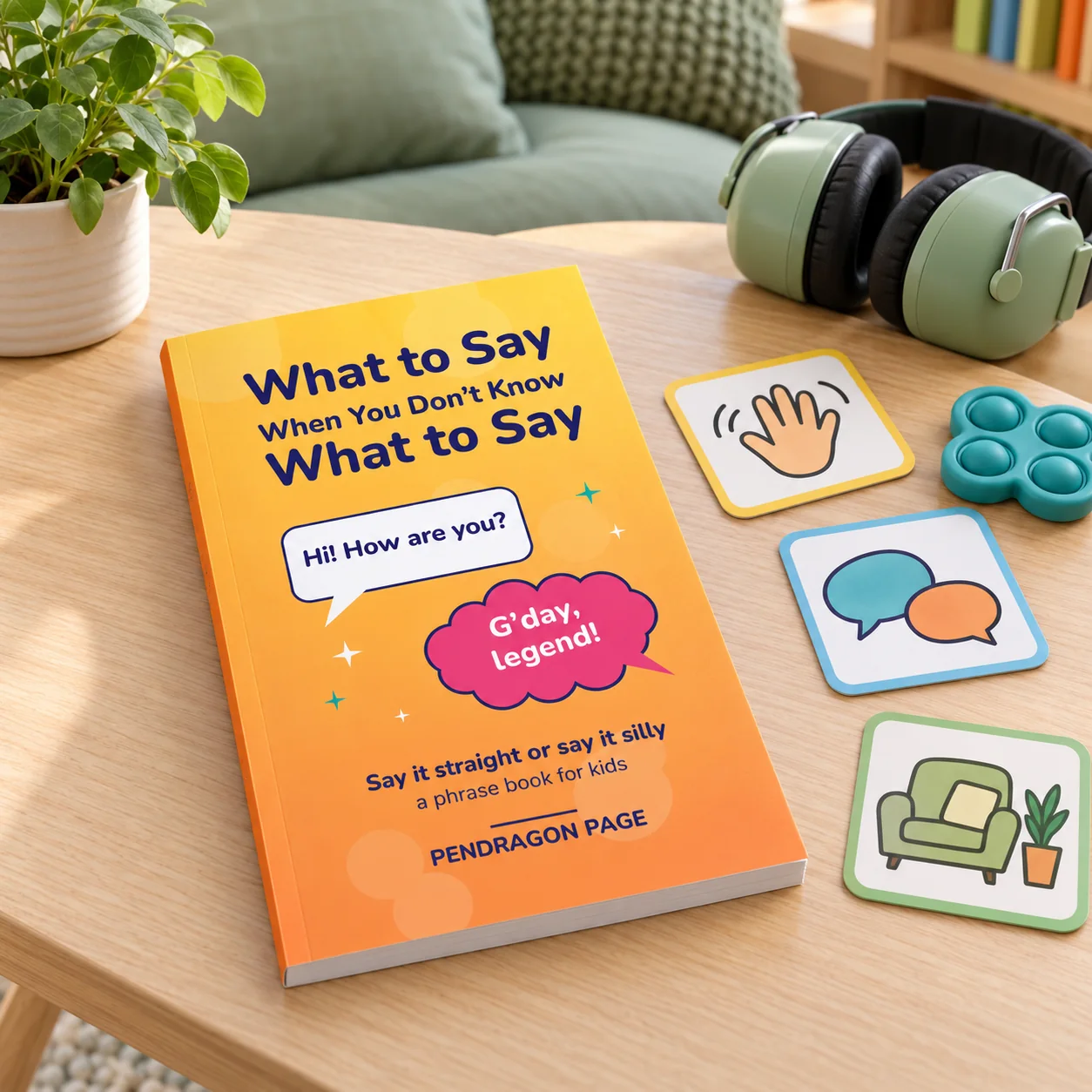
Why kids freeze here
In a loud room, the noise fills your child’s head and the words don’t come. By the time they’ve found them, the moment to ask for a break has usually passed. They may go quiet, cover their ears or head for the door, even though they knew exactly what they needed.
What to say
A Straight line is the plain, polite thing to say that works with anyone, and a Silly line is the playful version that lightens the mood with friends, so a child can pick the one that sounds like them.
Choose one line for each moment and practise it at home, so it’s ready before the school day asks for it.
- “The noise is a lot for me today. Could I sit near the door for a while?”
- “My feet need a walk. May I head to the bubbler and come straight back?”
- “I missed the second step. Could you tell me that part again, a bit slower?”
- “I need a short break. Can I sit at the back table for five minutes, then rejoin the group?”
From the book
It’s too loud for you
Straight: “It’s too loud for me. Can I go somewhere quieter?”
Silly: “It’s louder than a footy final in here. Can I step out?”
This is one of 268 moments in What to Say When You Don’t Know What to Say, from Chapter 3: At school, teachers and the classroom. Your child picks the line that sounds like them.
Questions parents ask
How are scripts different from social stories?
A social story explains a situation: what usually happens, who’ll be there and why. A script is the line your child says once they’re in it. The two can sit side by side. Our book is scripts, with two lines for most moments, one plain and one playful, so your child has words ready instead of a story to remember.
Will scripts make my child sound rehearsed?
At first, maybe a little, and that’s normal with any new words. Kids tend to swap a word here and there until the line sounds like their own voice. That’s the aim. A script is a starting point, not a speech to recite, so welcome the changes and let your child keep the version they’ve made their own.
Is this a therapy?
No. It’s a phrase book written straight to the child, with everyday words for everyday moments. It isn’t therapy, speech pathology or medical advice, and it doesn’t replace any of them. If you’re worried about your child, talk to your GP or your child’s school. They know your family and can help you work out a next step together.
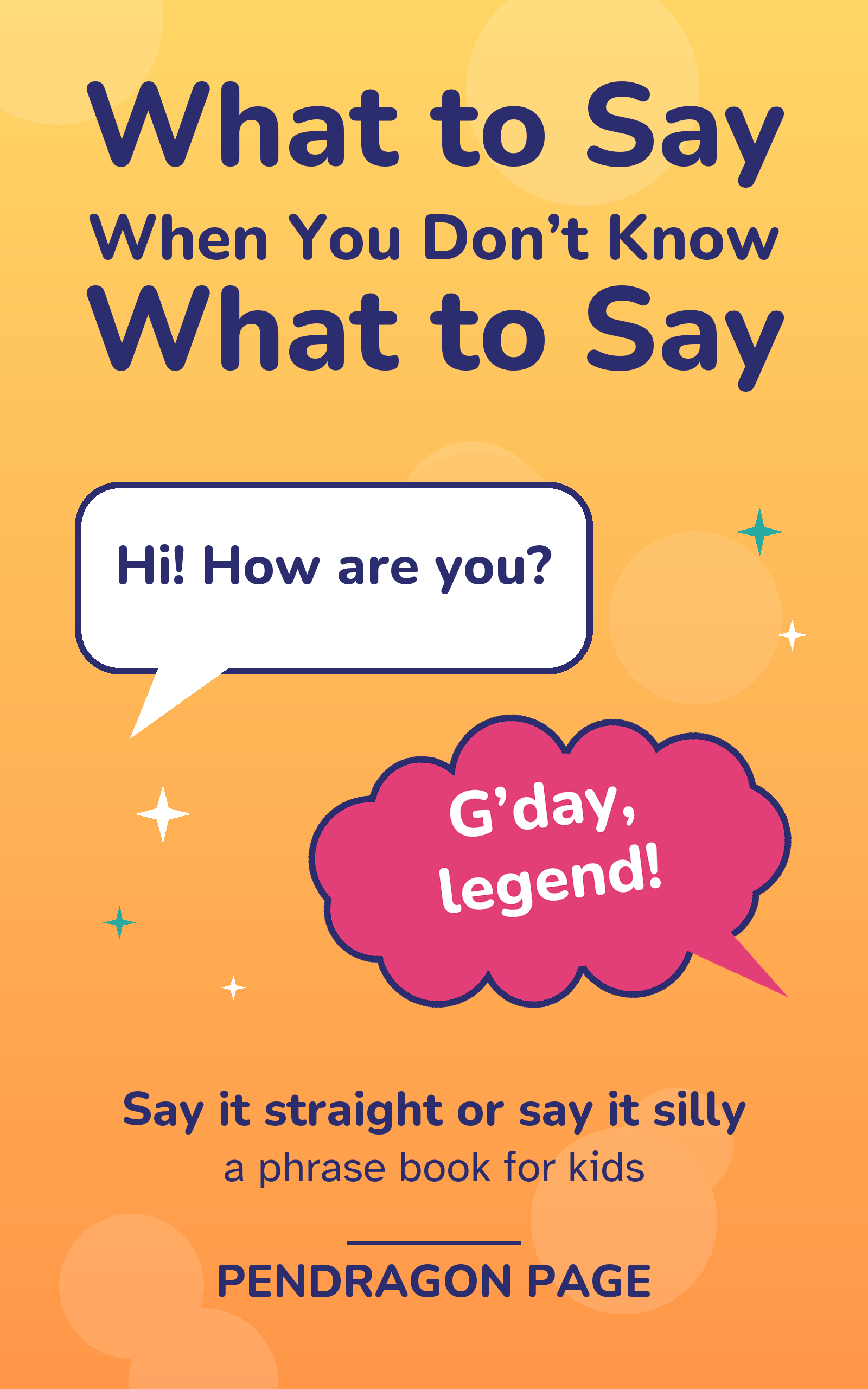
What to Say When You Don’t Know What to Say
268 moments, each with a straight line to try and most with a silly one too. For ages 7 to 10, written straight to your child.
- Classic paperback A$24.99 on Amazon
- Colour paperback A$34.99 on Lulu
- For eBook and more retailers click here
Related
Every child finds their own words in the end. Until then, they can borrow ours.
About this page: written by Pendragon.Page, publisher of What to Say When You Don’t Know What to Say (ISBN 978-1-7639611-1-1). The quoted lines are from Chapter 3. This page offers everyday phrasing, not clinical advice. The book isn’t a therapy or a cure. Last reviewed 25 Oct 2026.