How do I teach my child to say sorry properly?
A sorry that works names what your child did, shows they understand how it landed for the other person, and offers something better for next time. For example, “I’m sorry I grabbed your ball. That wasn’t fair. Next time I’ll wait for a turn.” Keep jokes out of a sorry. If your child can’t get the words out yet, a note or a drawing can come first.
Why kids freeze here
Saying sorry means admitting, out loud, that you got something wrong, and saying it to the person you upset. Kids often feel hot, embarrassed and a bit defensive all at once, so the words shrink to a mumble or vanish. A sorry practised in a calm moment is much easier to find in a hard one.
What to say
Choose one together and say it out loud at home, so it’s there when it’s needed.
- “I’m sorry I knocked your tower over. I’ll help you build it again.”
- “I’m sorry I called you that. It was mean, and I’d hate it if someone said it to me.”
- “I didn’t mean to break it, but I did. Can I swap you one of mine, or save up for a new one?”
- “Can I walk over and sit with you? I owe you a sorry.”
In the book, the moments where your child has hurt someone drop the joke line on purpose. Only the plain Straight line is offered, because a laugh can wait until the other person is smiling again.
From the book
You want to make up after a fight
Straight: “Sorry about before. Can we start again?”
Silly: “Want to un-fight? I’ll go first.”
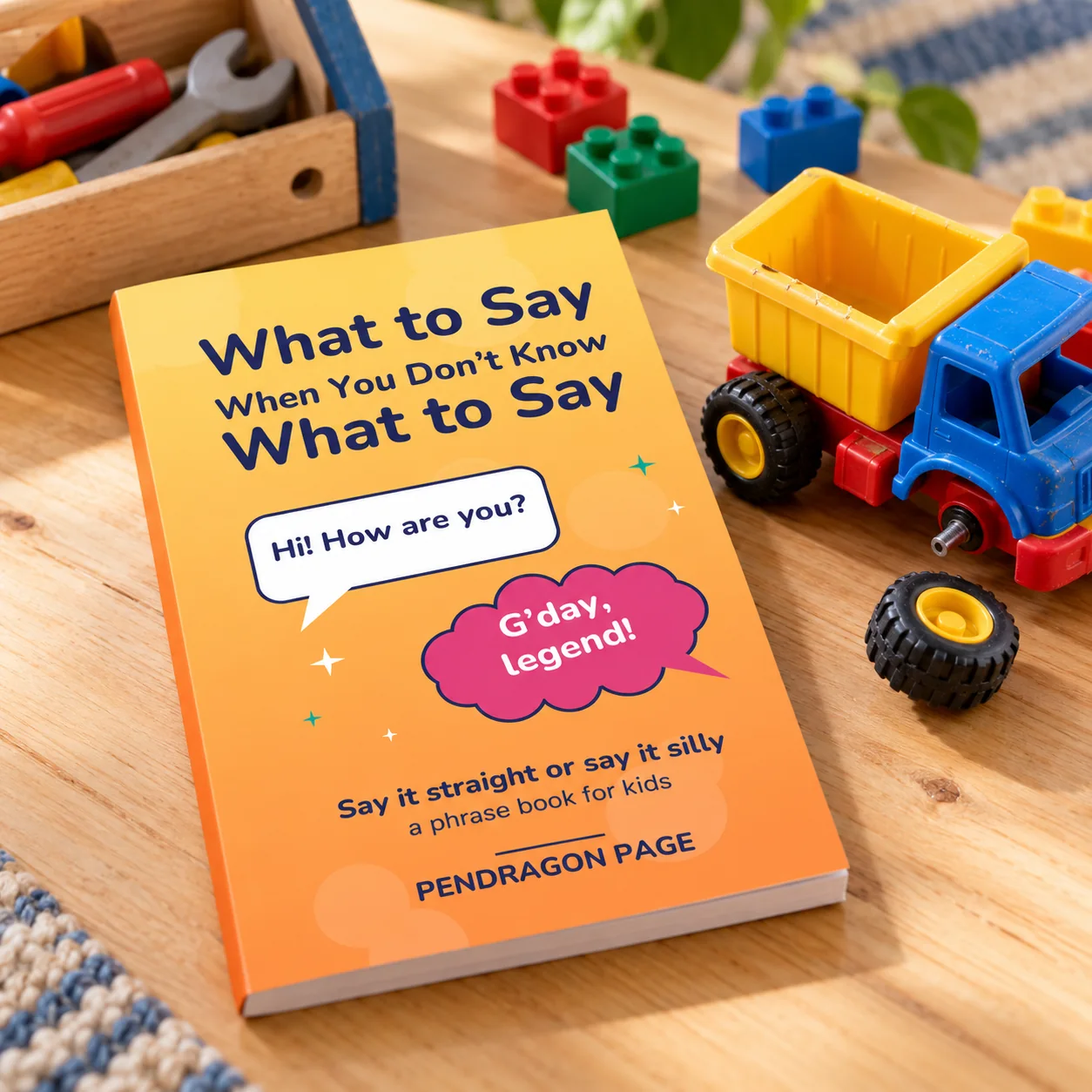
This is one of 268 moments in What to Say When You Don’t Know What to Say, from Chapter 7: When something goes wrong. Your child picks the line that sounds like them.
Questions parents ask
Should I make my child say sorry?
Guide them to it rather than forcing it on the spot. A sorry pulled out under pressure often comes out flat, and both kids can tell. Give your child a minute to cool down, talk about what happened and how the other child might feel, then help them choose their words. A sorry that comes a little later but means something is worth the wait.
What if my child says sorry but doesn’t mean it?
Treat it as a start, not a finish. A grudging sorry still shows your child knows a line was crossed. Later, in a calm moment, ask what they think the other person felt and what might make things right. Actions often carry the meaning that words can’t yet, like handing back a toy or inviting a friend back into the game.
What can my child say when someone says sorry to them?
Something short and true. If they’re ready to move on, “Okay, we’re good” works well. If they’re still upset, “Thanks. I’m still upset, so give me a little while” is fine too. Your child doesn’t have to pretend everything is fixed, and they don’t have to stay cross forever either. Taking a sorry kindly is a skill worth practising as well.
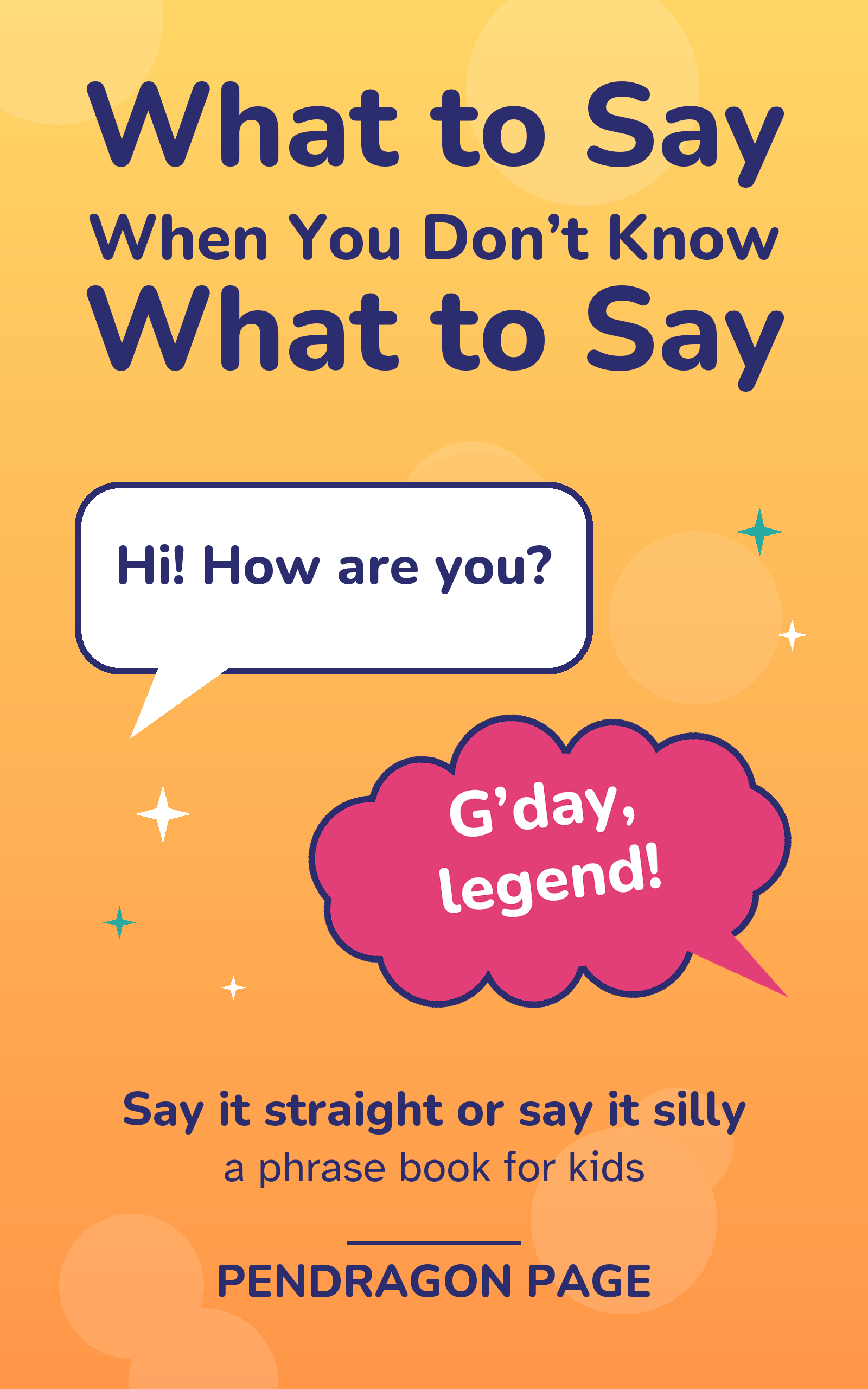
What to Say When You Don’t Know What to Say
268 moments, each with a straight line to try and most with a silly one too. For ages 7 to 10, written straight to your child.
- Classic paperback A$24.99 on Amazon
- Colour paperback A$34.99 on Lulu
- For eBook and more retailers click here
Related
Every child finds their own words in the end. Until then, they can borrow ours.
About this page: written by Pendragon.Page, publisher of What to Say When You Don’t Know What to Say (ISBN 978-1-7639611-1-1). The quoted lines are from Chapter 7. This page offers everyday phrasing, not clinical advice. The book isn’t a therapy or a cure. Last reviewed 25 Oct 2026.