How can my child start a conversation with another kid?
The easiest opener is a question about the other kid, like “What are you building?” or “What game is that?” Then one more question about their answer. If the chat dries up, it’s fine to finish with “I’m going to fill my water bottle now. Talk again soon!” Short and friendly is enough.
Why kids freeze here
Walking up to another kid means guessing what to say before knowing if they’ll want to talk. That guess can feel like a test with everyone watching, so the words dry up before the first one comes out. Having one opener ready turns the test back into a simple question.
What to say
Choose one together and practise it at home, so it’s ready the next time they spot someone they’d like to talk to.
- “I like the stickers on your drink bottle. Where did you get them?”
- “Have you finished that book yet? I’m halfway through.”
- “So what did you do after that?”
- “I’m going to grab my snack now. Want to talk more at recess?”
You can read all of chapter 1 free on our book page.
From the book
Asking what they’re into
Straight: “What are you into at the moment?”
Silly: “Tell me what you’re into. I need a new hobby!”
This is one of 268 moments in What to Say When You Don’t Know What to Say, from Chapter 1: Saying hello and starting a chat. Your child picks the line that sounds like them.
Questions parents ask
What if the other kid gives one-word answers?
Short answers often mean nerves, not dislike. Some kids need a minute to warm up. Your child can try a question that can’t be answered in one word, like “How did you get so good at that?” If a couple of tries still get very little back, it’s fine to smile, give a friendly wave and have another go tomorrow.
How can my child end a chat without being rude?
Give a reason, say something kind, and go. “I’m off to get a drink. Thanks, that was a good chat!” covers all three. Kids don’t need a big excuse, and a friendly goodbye leaves the door open for another day. If the other kid keeps talking, a cheerful “Talk soon!” while heading off is polite enough.
What can they say when they run out of things to say?
A quiet gap is normal, and it doesn’t mean the chat went badly. Your child can look around for something to ask about, like what the other kid is eating or playing, or bring up something from the day, like a funny moment in class. Sitting together without talking is fine too. Plenty of friendships run on comfortable quiet.
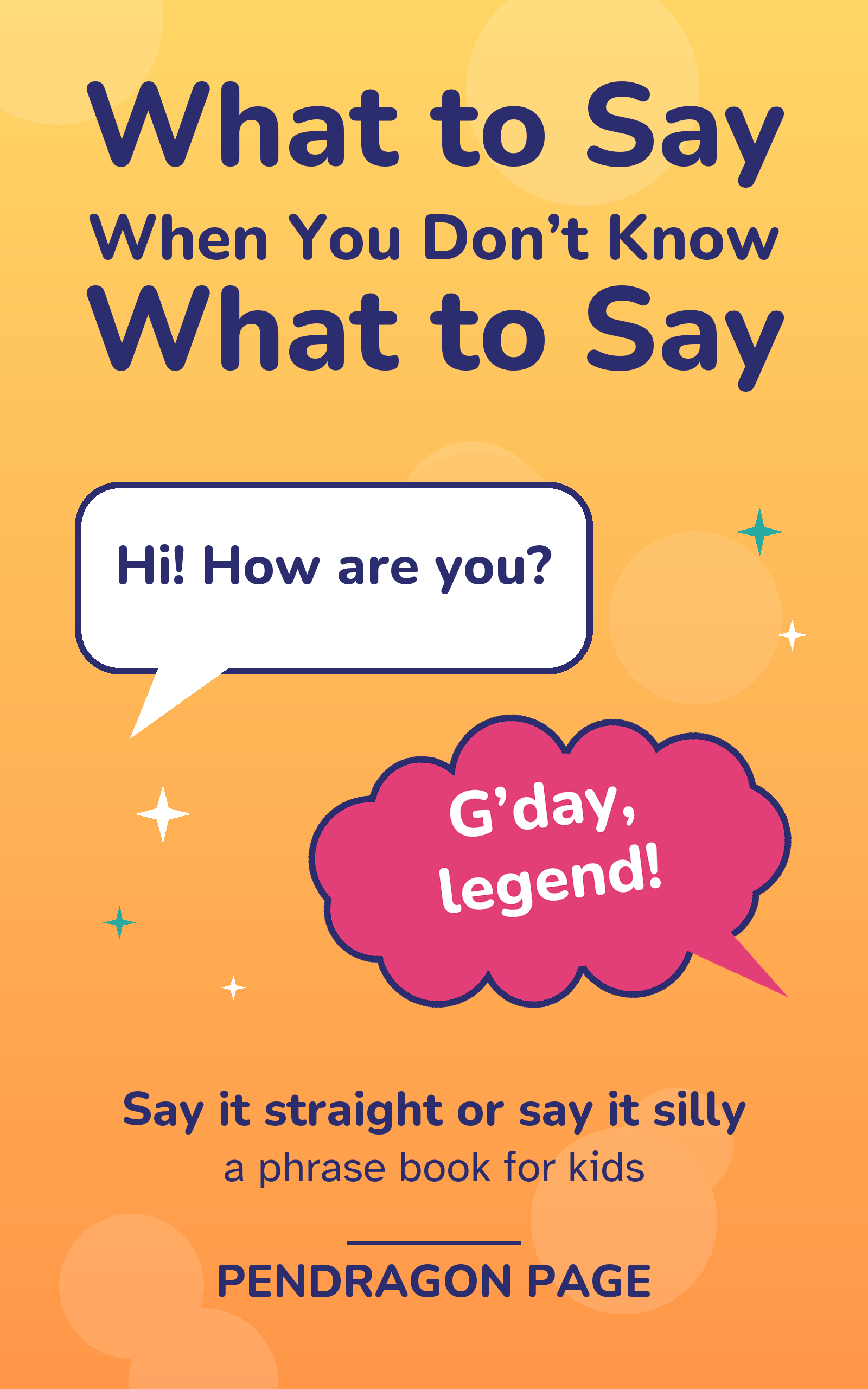
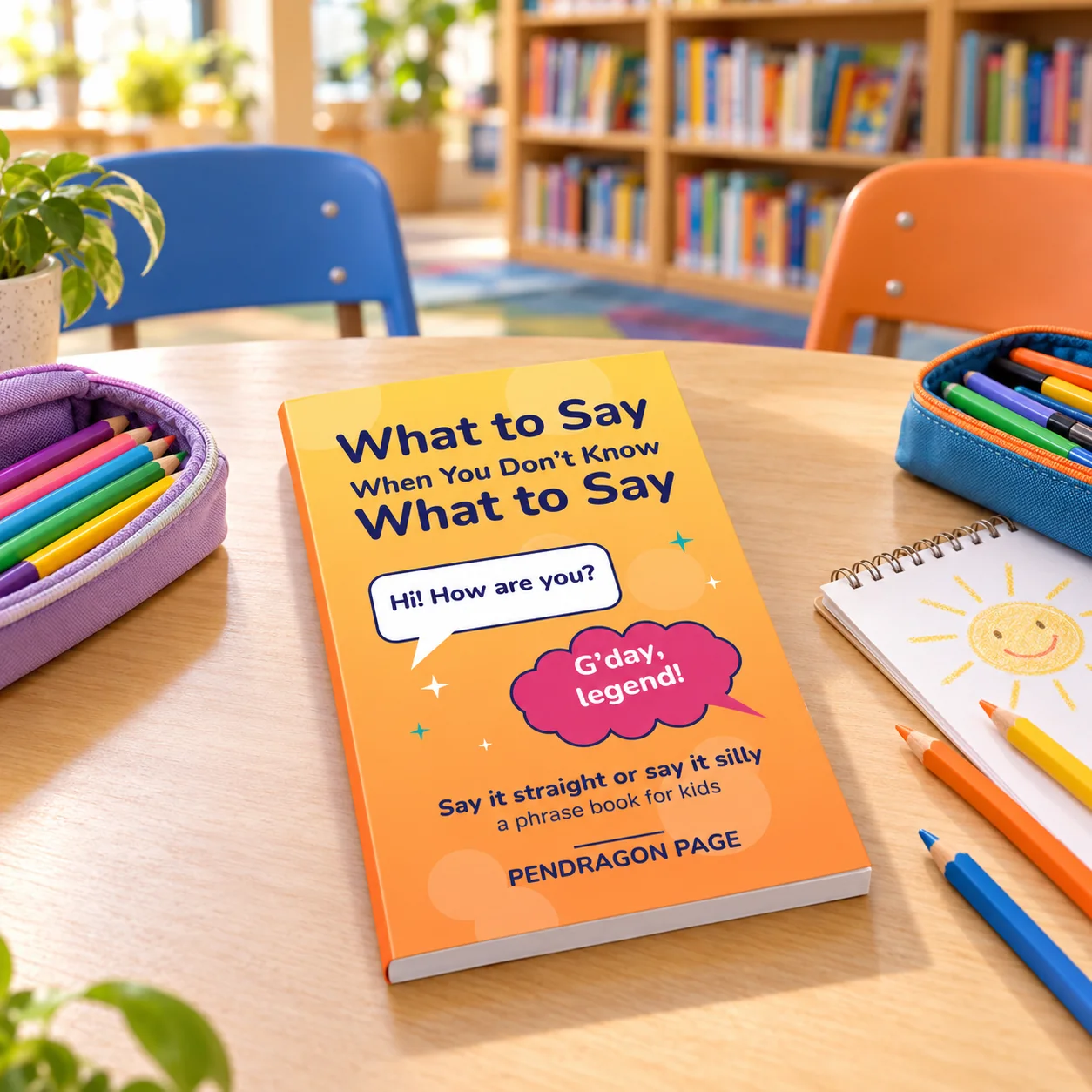
What to Say When You Don’t Know What to Say
268 moments, each with a straight line to try and most with a silly one too. For ages 7 to 10, written straight to your child.
- Classic paperback A$24.99 on Amazon
- Colour paperback A$34.99 on Lulu
- For eBook and more retailers click here
Related
Every child finds their own words in the end. Until then, they can borrow ours.
About this page: written by Pendragon.Page, publisher of What to Say When You Don’t Know What to Say (ISBN 978-1-7639611-1-1). The quoted lines are from Chapter 1. This page offers everyday phrasing, not clinical advice. The book isn’t a therapy or a cure. Last reviewed 25 Oct 2026.