My child has no one to sit with at lunch. What can they say?
Your child can walk up and ask, “Can I sit here?” A kid eating alone is usually pleased to have company. If a seat is saved, “That’s fine, thanks” and moving on is enough. If lunch feels too loud or too much, it’s fine to ask a teacher about the library or a calmer place to spend lunch.
Why kids freeze here
Lunch has no seating plan, so every day starts with a small decision made in front of everyone. Standing there holding a lunchbox while the groups settle can feel like being picked last, and that’s when the words go missing. One short question, practised at home, can get them sitting down.
What to say
Choose one together and say it a few times at home, so it comes out easily at the lunch tables.
- “Mind if I join you? I’ve got my lunch with me.”
- “Is anyone using this end of the bench?”
- “That’s okay, I’ll try the next table.”
- “I’ll walk over to the library and read till the bell.”
From the book
You don’t know who to sit with at lunch
Straight: “Hi, is it okay if I sit here?”
Silly: “Is this seat free? I promise I’m good company.”
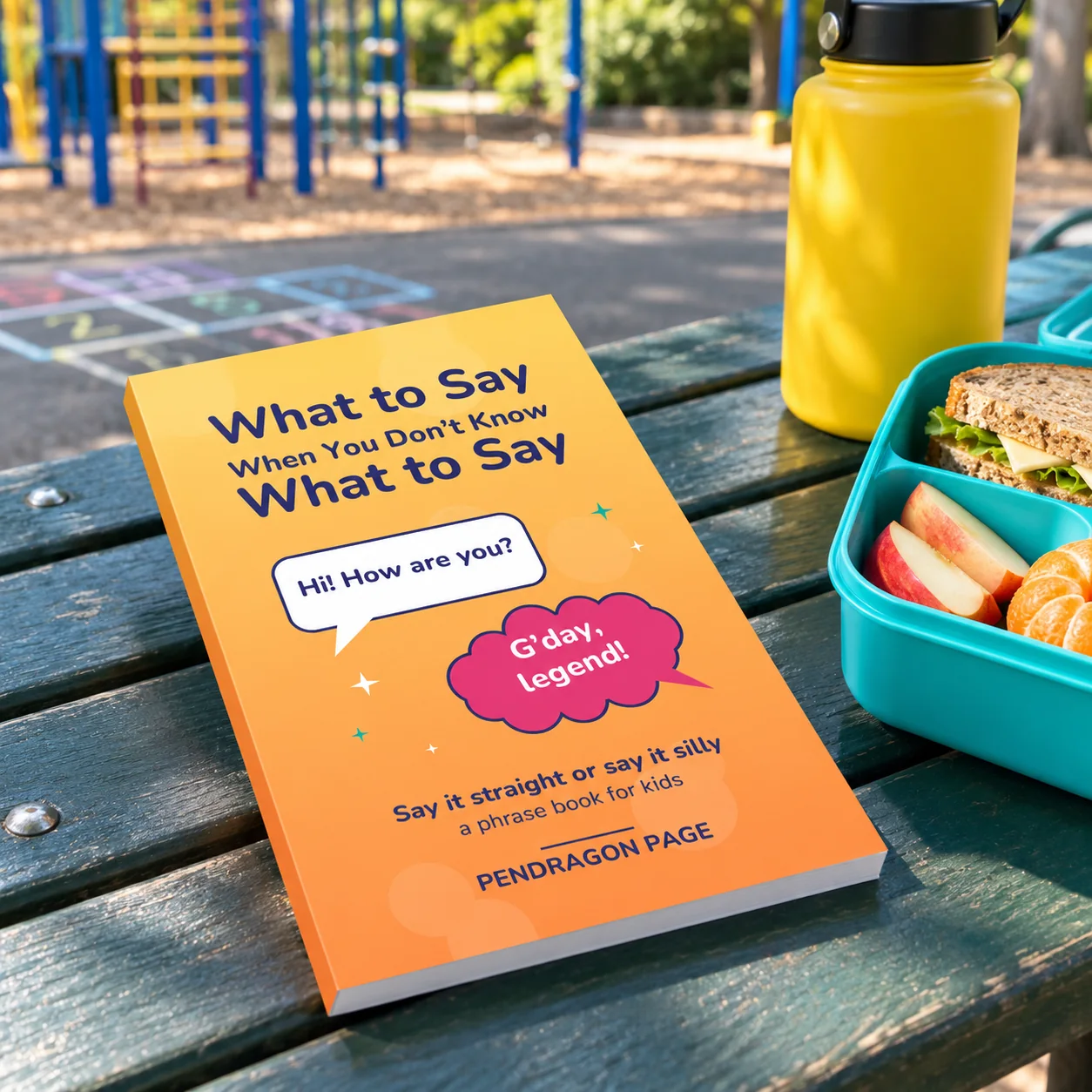
This is one of 268 moments in What to Say When You Don’t Know What to Say, from Chapter 4: The playground and lunchtime. Your child picks the line that sounds like them.
Questions parents ask
What if someone says the seat is saved?
Your child can say “That’s fine, thanks” and look for the next spot. A saved seat is usually about a friend running late, not a judgement on your child. If it happens every day with the same group, have a quiet chat at home about who else eats nearby, and think about a word with the teacher.
Is it okay for my child to spend lunch in the library?
Yes. Some kids recharge best in quiet, and a calm half-hour can set up a better afternoon. Most schools are happy for kids to read or draw inside, as long as the duty teacher has been told. Now and then, ask how lunch is going and what they enjoy about it, so you know the library is a choice and not a retreat.
What can my child say if a game gets too rough?
Something short and clear, like “I’m out for this round. I’ll come back when it calms down.” Your child doesn’t have to argue or explain, and stepping out is allowed. If the same game turns rough again and again, or someone gets hurt, they should let a grown-up know. That’s looking after themselves, not getting anyone in trouble.
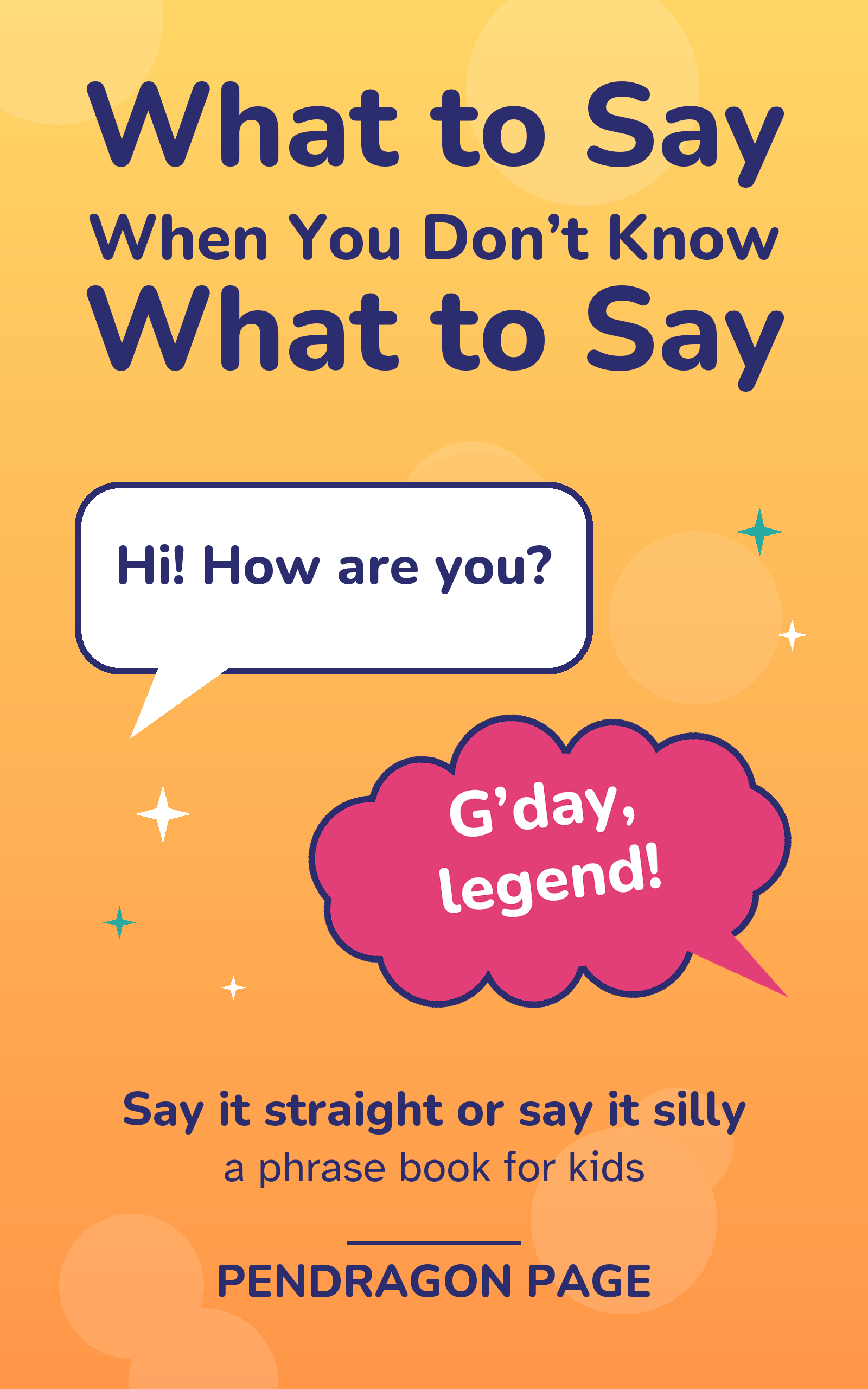
What to Say When You Don’t Know What to Say
268 moments, each with a straight line to try and most with a silly one too. For ages 7 to 10, written straight to your child.
- Classic paperback A$24.99 on Amazon
- Colour paperback A$34.99 on Lulu
- For eBook and more retailers click here
Related
Every child finds their own words in the end. Until then, they can borrow ours.
About this page: written by Pendragon.Page, publisher of What to Say When You Don’t Know What to Say (ISBN 978-1-7639611-1-1). The quoted lines are from Chapter 4. This page offers everyday phrasing, not clinical advice. The book isn’t a therapy or a cure. Last reviewed 25 Oct 2026.