What can my child say when they’re left out?
Help your child ask to come along in plain words, like “Wait for me. Can I come too?” Often the group just didn’t notice. If it keeps happening, your child can ask a friend later, “Are we okay?”, and look for other kids who are on their own. Choosing to be alone sometimes is fine too.
Why kids freeze here
Being left behind happens fast, and it lands as a message about them even when nobody meant to send one. Your child’s mind jumps to “they don’t want me”, and that thought takes up all the room where the words would go. A short question they already know gives them something to do with the moment besides stand still.
What to say
Choose one together and say it out loud a few times at home, so it’s ready when it’s needed.
- “Hang on, I’m coming with you!”
- “Hey, I was still here. What’s the plan?”
- “Mind if I tag along with you lot?”
- “No worries, I’m heading over to the handball courts to see who’s there.”
More help
- Raising Children Network - school age - friendships and feelings for kids aged 6 to 11.
From the book
The group walks off without you
Straight: “Hey, where are you all going? Can I come?”
Silly: “Hey, wait up! The group’s not complete without me.”
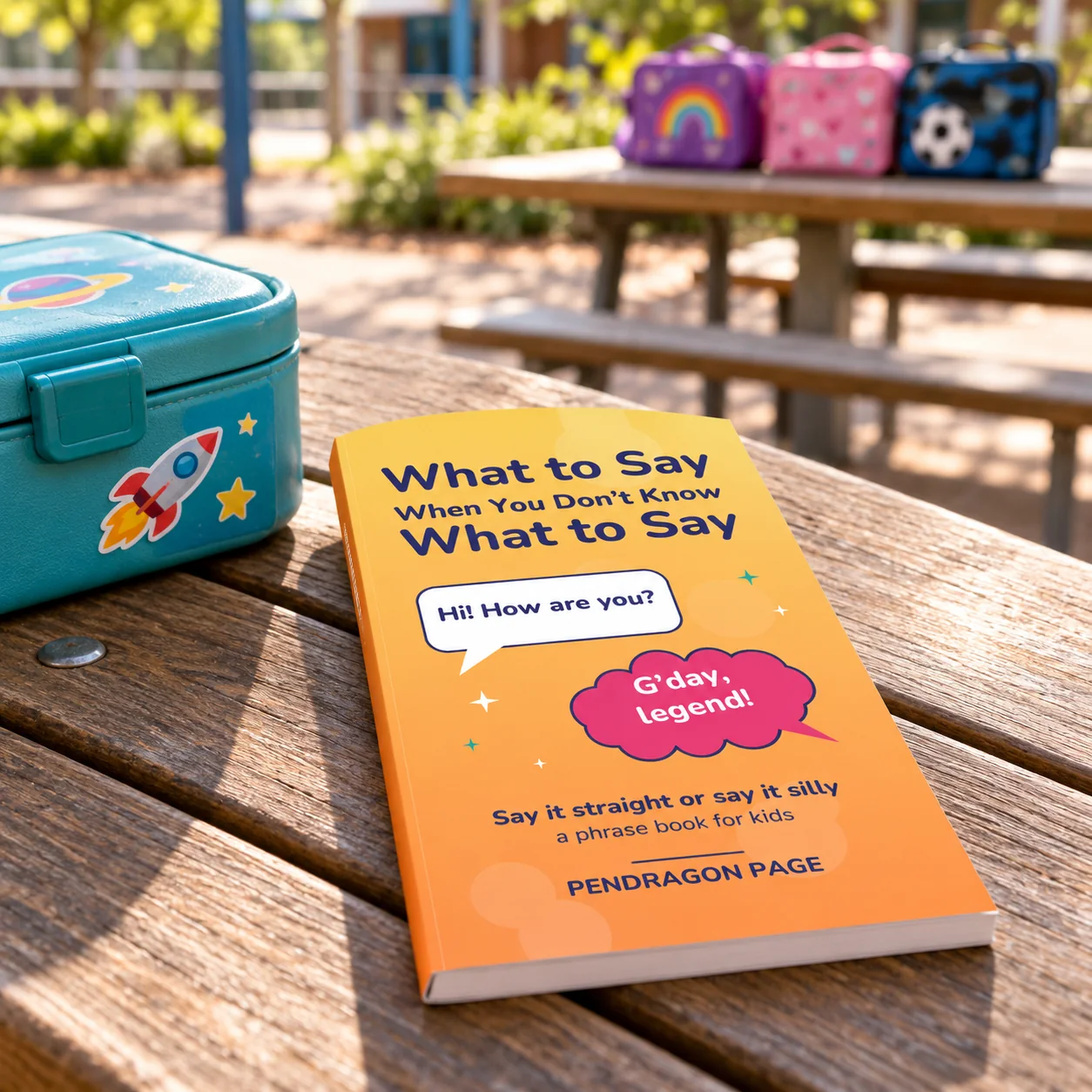
This is one of 268 moments in What to Say When You Don’t Know What to Say, from Chapter 5: When you’re left out. Your child picks the line that sounds like them.
Questions parents ask
Should I talk to the teacher or the other parents?
Start with the teacher if it’s happening most days or your child has started dreading school. Teachers see the playground and can quietly pair kids up or mix groups without any fuss. Going to other parents first can turn a kids’ problem into an adults’ one, so keep that for families you already know well. A single rough afternoon doesn’t need either, just a listening ear at home.
What if my child likes being on their own?
Then it’s a choice, not a problem. Plenty of kids recharge with a book or a quiet wander at lunch and come back ready for the afternoon. The thing to watch is whether time alone is chosen or whether it’s the only option left. Ask what they’d do at lunch if they could pick anything. If the answer includes other kids, they might want a hand getting there.
How can my child bring it up with a friend later?
Pick a calm moment when it’s just the two of them, away from the group. A short check-in works best, something like “Are we okay? I felt a bit left behind at lunch.” Most of the time the friend didn’t realise, and saying it once clears the air. If the answer hurts, it’s still useful to know, and your child can widen their circle over the next few lunchtimes.
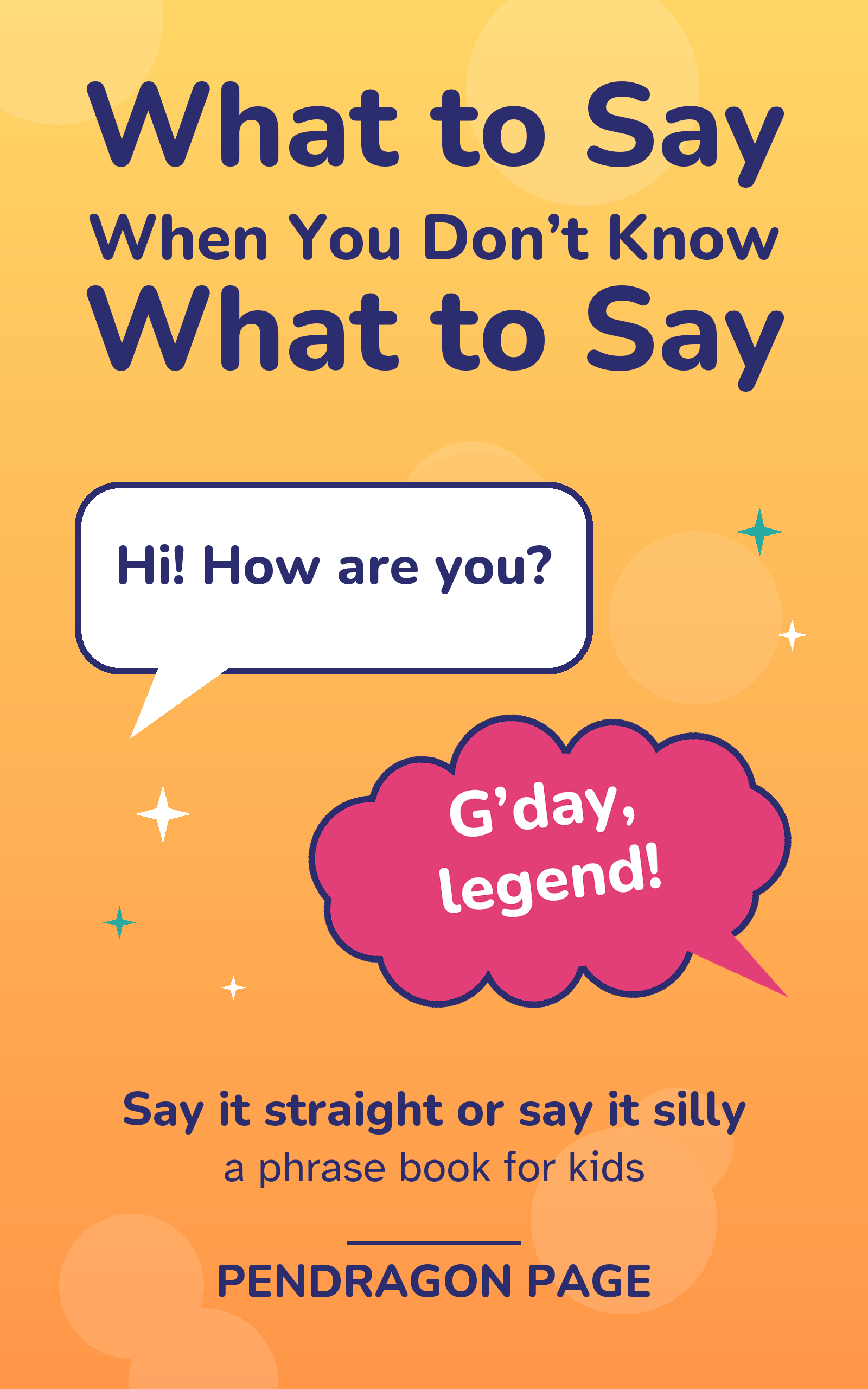
What to Say When You Don’t Know What to Say
268 moments, each with a straight line to try and most with a silly one too. For ages 7 to 10, written straight to your child.
- Classic paperback A$24.99 on Amazon
- Colour paperback A$34.99 on Lulu
- For eBook and more retailers click here
Related
Every child finds their own words in the end. Until then, they can borrow ours.
About this page: written by Pendragon.Page, publisher of What to Say When You Don’t Know What to Say (ISBN 978-1-7639611-1-1). The quoted lines are from Chapter 5. This page offers everyday phrasing, not clinical advice. The book isn’t a therapy or a cure. Last reviewed 25 Oct 2026.